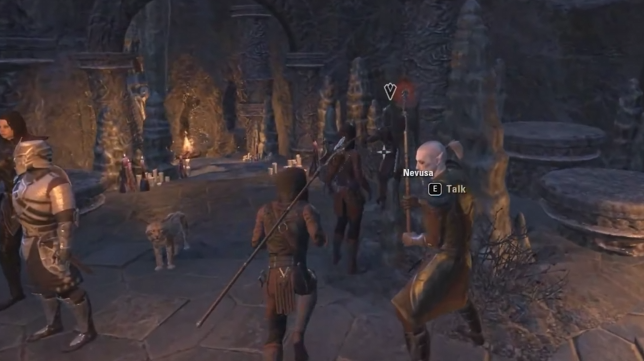
In the sprawling worlds of The Elder Scrolls, lore can be as deep or as casual as players wish to explore. At a glance, the series offers thrilling sandbox RPG gameplay, yet beneath its surface lies a rich tapestry of myth, history, and cosmic mystery. Among the most compelling and complex figures anchoring this lore is Mannimarco, the King of Worms – a character whose influence spans centuries and three major games, while defying the boundaries of mortality and time itself.
Mannimarco: The King of Worms
Mannimarco, a powerful Altmer necromancer, is perhaps one of the oldest and most enigmatic characters in the Elder Scrolls universe. Known primarily for his pursuit of immortality and godhood through necromancy, Mannimarco stands in opposition to the Mages Guild, which he views as a threat to his ambition. His narrative stretches across eras, and thanks to a reality-shattering event known as the Dragon Break, multiple versions of Mannimarco coexist – all canonically valid.
His evolution from mortal sorcerer to lich, and ultimately to godhood, encapsulates the metaphysical nature of Elder Scrolls lore. Each of his appearances in The Elder Scrolls Online, Daggerfall, and Oblivion contributes a different layer to his character and the timeline, revealing how one figure can redefine the narrative fabric of a universe.
Elder Scrolls Online (ESO): The Rise of the King of Worms
Chronologically, Mannimarco’s story begins in The Elder Scrolls Online, set during the Second Era, more than 700 years before Daggerfall. In this period, he has already founded his necromantic cult, The Order of the Black Worm, and has begun working toward his ascension.
In ESO’s main storyline, Mannimarco plays a central antagonistic role. He makes a treacherous pact with the Daedric Prince Molag Bal, assisting in the Planemeld – a catastrophic fusion of Nirn with Coldharbour. However, true to his manipulative nature, Mannimarco never intended to honor the deal. Instead, he planned to steal power for himself, using the chaos as a springboard for godhood.
His betrayal is ultimately his undoing. By the end of ESO’s story, Mannimarco is cast into Coldharbour, to be tortured for eternity by Molag Bal – or so it seems.
The Elder Scrolls II: Daggerfall – Apotheosis and the Dragon Break
Fast forward to the events of The Elder Scrolls II: Daggerfall, set in the Third Era, and Mannimarco reemerges. By this time, he has escaped Coldharbour, continuing his pursuit of divine power. He manipulates the protagonist (the Agent) into acquiring the Totem of Tiber Septim, a key artifact tied to the Numidium, a massive golem of godlike potential.
The climax of Daggerfall culminates in the Warp in the West, a Dragon Break that splinters time itself. This event creates multiple simultaneous realities, all of which are canon. For Mannimarco, this means that one version of him succeeds in becoming a god, ascending to the heavens as the Necromancer’s Moon – a celestial body used by necromancers to craft Black Soul Gems.
However, due to the nonlinear nature of the Dragon Break, another version of Mannimarco remains mortal, surviving into the next game.
The Elder Scrolls IV: Oblivion – The Mortal King Returns
In Oblivion, set during the waning days of the Third Era, Mannimarco returns once more – this time as a mortal lich and the ultimate antagonist of the Mages Guild questline. Though the Necromancer’s Moon is visible in the night sky, a lingering sign of his godhood, the Mannimarco encountered here is flesh and blood (or bone).
The Order of the Black Worm remains active, recruiting disillusioned necromancers after the Mages Guild banned the practice. Mannimarco’s plan involves using these forces to invade Cyrodiil and topple the Mages Guild once and for all.
However, the Mannimarco seen in Oblivion feels notably weaker than his ESO counterpart. Despite his dark legend, he is defeated relatively easily by the player. Yet even in death, his legacy endures. The Necromancer’s Moon continues to empower necromantic rituals, producing black soul gems – a subtle reminder that the god form of Mannimarco still exists somewhere, watching from above.
Multiple Mannimarcos, One Legacy
The beauty of Mannimarco’s story lies in its paradoxical structure. Thanks to the Dragon Break, every version of his fate is true:
He is a mortal lich defeated by the player in Oblivion.
He is a god residing in the sky as the Necromancer’s Moon.
He is a scheming villain tortured in Coldharbour.
He is a powerful manipulator who once stood at the brink of reshaping Tamriel.
Each of these Mannimarcos plays a role in the larger tapestry of The Elder Scrolls lore, reminding players that time and truth are flexible concepts in this universe. He serves as a symbol of necromantic ambition, divine hubris, and the strange metaphysical possibilities of Tamriel’s timeline.
Conclusion: The King of Worms and the Soul of Elder Scrolls
Few characters embody The Elder Scrolls’ lore like Mannimarco. His journey across three distinct titles demonstrates how the franchise handles narrative continuity – not through rigid linearity, but through mythic multiplicity. Whether mortal or divine, Mannimarco’s presence is a constant in Tamriel, shaping the fate of empires, challenging the laws of mortality, and leaving players with haunting questions about the nature of power and identity.
Ready to face Mannimarco or rise through Tamriel’s ranks yourself? Grab some ESO gold fast and cheap from MMOexp – it’s where I always go for safe, quick deliveries. Rule like the King of Worms himself.